Moab Gravel Riding / Arches and Canyonlands
Moab Gravel Riding in and around Arches and Canyonlands National Parks
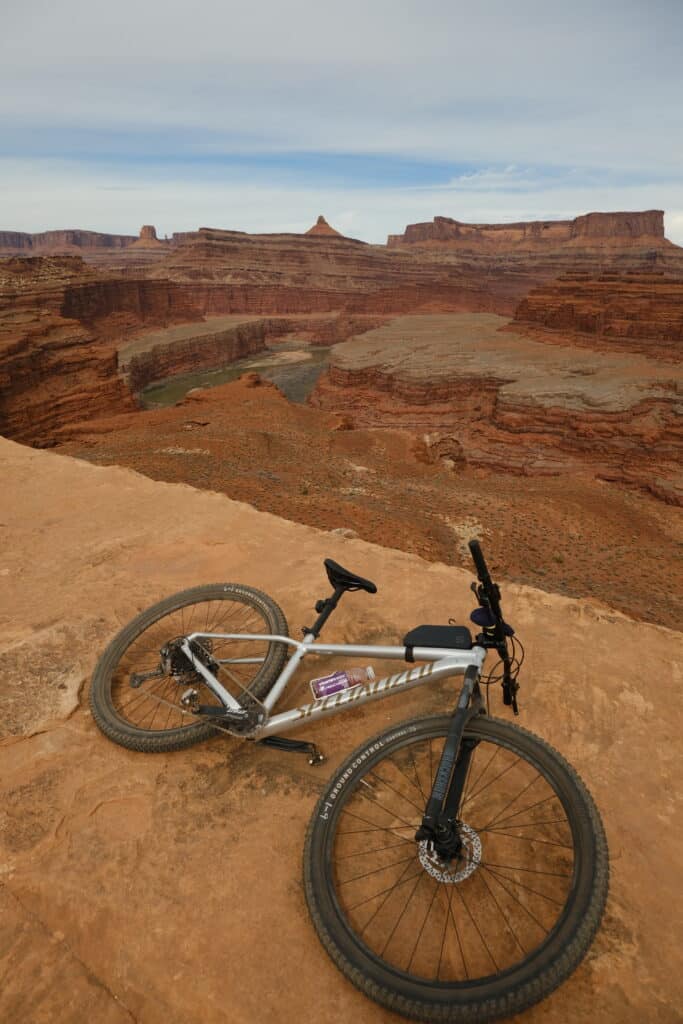
When riders ask about gravel bikes in Moab, the first thing we explain is that Moab gravel is not typical gravel. While traditional gravel bikes have their place and can handle some sections, they are somewhat limited in this desert environment. Dirt roads quickly turn into sandstone shelves, deep sand, embedded rock, and rugged 4×4 routes. Many of the most iconic gravel rides are really backcountry jeep roads with constantly changing surfaces. For this reason, we often recommend a short travel hardtail bike like the Specialized Rockhopper rental instead of a traditional drop-bar gravel bike.
If you do ride a gravel bike in Moab, we recommend using at least 50 millimeter tires and some form of front suspension to handle sand, ledgy terrain, and slickrock transitions.
The White Rim Trail
The White Rim Trail is often described as a dirt road loop, but in reality, it is a rugged desert route. It features 100 miles of desert terrain with around 6800 feet of climbing. Riders encounter long sandy stretches, rocky climbs and descents, exposed sandstone ledges, continuous surface vibration over many miles, and remote sections where reliability matters.
Riding the White Rim requires hours of absorbing chatter and navigating constantly shifting terrain. A hardtail with wide tires and front suspension reduces fatigue and increases confidence over this long desert ride.
Maps and trail bet available in store. This one is long, bikepacking bags are recommended
The Jug Handle Loop
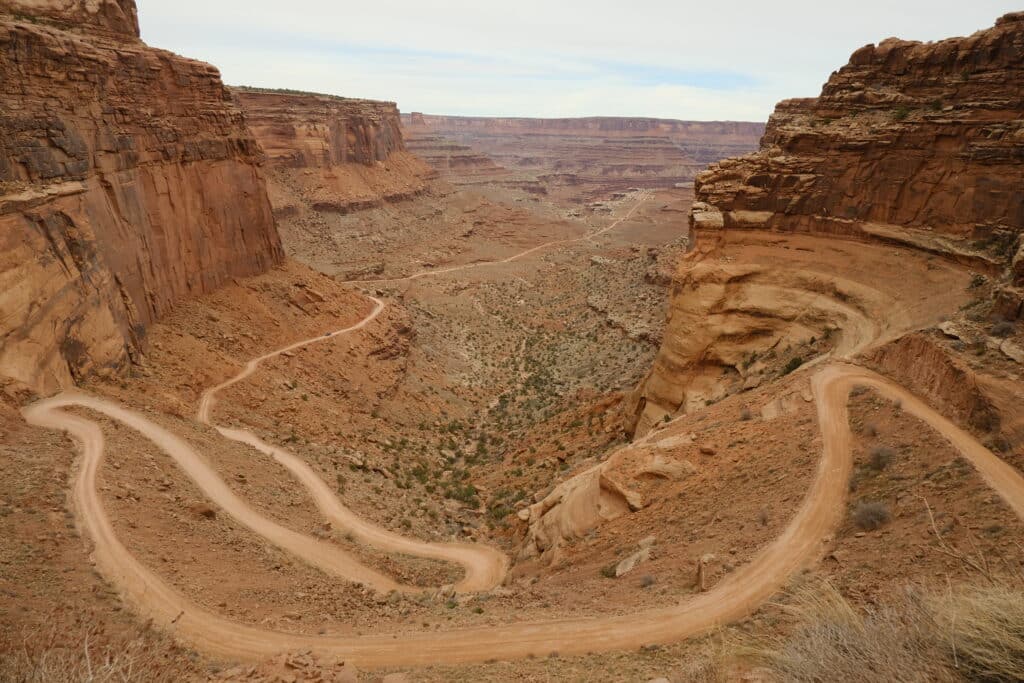
The Jug Handle Loop links Long Canyon Trail, Shafer Trail, and Potash Road and is often described as a mini White Rim. This loop is 37 miles with approximately 3200 feet of climbing.
The Jug Handle Loop offers steep dirt descents, chunky rock, embedded ledges, sand pockets, pavement connectors, and scenic canyon riding with big exposure. Like White Rim, it blends surfaces continuously, requiring a bike that can handle sand, slickrock transitions, and rough jeep road chatter without sacrificing pedaling efficiency.
Maps and trail beta are available in store but here is a link to the route. Jug Handle Loop – MTB Project
Arches Backcountry Loop
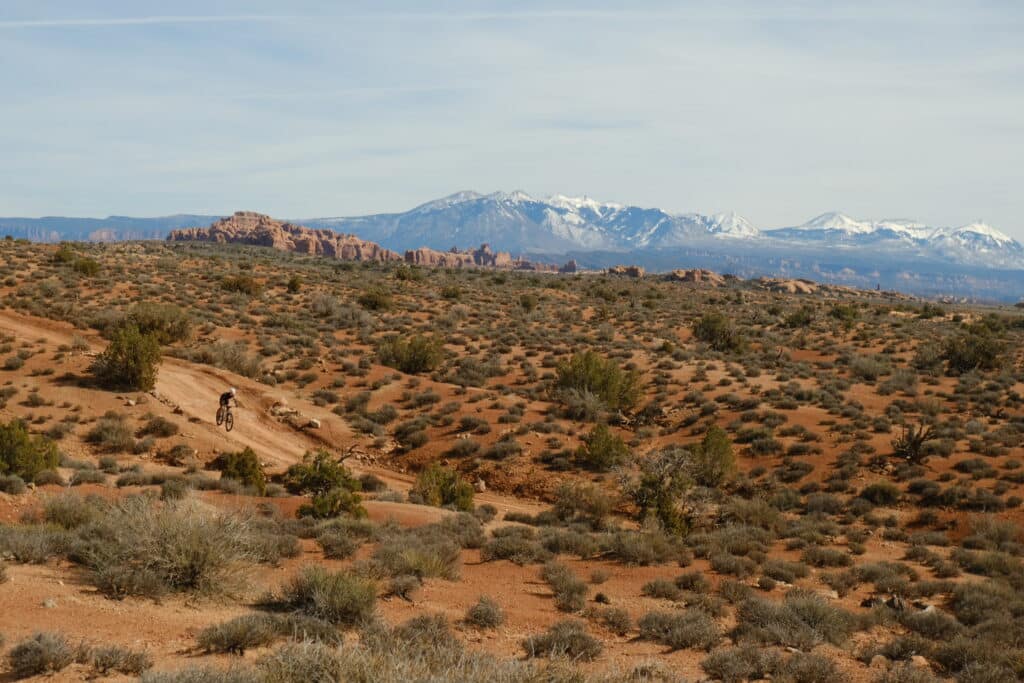
One of the most scenic ways to experience Arches National Park is by bike. The route into the park and out of the park from Moab is 37 miles with around 2500 feet of climbing using the Arches Scenic Drive and Willow Springs road. Riders can extend the route by linking in multiple singletrack options to add mileage and technical variety.
Combining pavement with dirt connectors and backcountry options provides a full desert experience. Larger tires and front suspension make these transitions seamless and far more comfortable.
Maps and trail beta available in store.
Gravel-Friendly Roads: Kane Creek and Sand Flats
Not all Moab gravel is rugged backcountry. Some routes are smoother and better suited to traditional gravel bikes but still work well on a hardtail. Kane Creek Road and Sand Flats Road are two examples.
Kane Creek Road offers mostly hardpacked terrain that is suitable for gravel bikes for about 11 miles one way. The route gradually becomes rougher the farther you ride, offering more technical challenges like going up and over Hurrah pass that are better handled on a hardtail.
Sand Flats Road provides a mix of surfaces, with areas that can get quite washboarded or soft. It also features excellent singletrack options like the Raptor Route and Slickrock Trail that allow riders to extend mileage and explore more technical desert terrain. While gravel bikes can manage parts of Sand Flats, a short-travel hardtail allows for more control, comfort, and versatility on these varied surfaces.
Why a Hardtail Bike Works Best
A hardtail bike like our Specialized Rockhopper rental provides the right balance for Moab gravel riding. It is lightweight and efficient on pavement and long climbs, has wide tires for sand and loose rock, and short travel front suspension to reduce fatigue on ledges and repeated impacts. A durable and simple setup is ideal for remote desert riding.
A hardtail pedals efficiently on smooth surfaces while remaining stable and composed when gravel turns into slickrock, sand, or jeep trail.
Conclusion
In many parts of the country, a traditional gravel bike is ideal. In Moab, gravel often becomes sandstone, ledges, and deep sand. A lightweight short travel hardtail provides the versatility needed for these routes without sacrificing efficiency.
Gravel bikes have their place on routes like Kane Creek Road and Sand Flats Road, but for most of Moab’s rugged trails, a short travel hardtail is the better choice. If you do ride a gravel bike, it is much better with 45-50mm tires and front suspension. Iconic routes like the White Rim Trail, the Jug Handle Loop, and the Arches backcountry loop showcase the full range of Moab gravel terrain and reward riders who are prepared with the right bike. Book a Specialized Rockhopper here.